
The medical device industry operates within an uncompromising standard where accuracy, reliability and sterility are paramount. In this high-stakes environment, manufacturing processes must deliver not only intricate designs but also absolute consistency and material integrity. High-pressure die casting has emerged as an indispensable manufacturing solution, evolving far beyond simple metal forming to become a critical enabler of modern medical innovation. By providing unparalleled capabilities in the production of complex, high-performance components, die casting is fundamentally shaping tools for diagnosing, treating and improving patient outcomes.
The Unmatched Value Proposition for Medical Applications
Die casting’s ascendancy in medtech is driven by a unique synergy of benefits that align perfectly with the sector’s demands:
Extreme Precision and Complexity: The process excels at producing net-shape or near-net-shape parts with intricate geometries—thin walls, internal channels, and precise mounting bosses—directly from the mold. This minimizes secondary machining, reduces waste, and allows for the design of highly complex, integrated components that would be cost-prohibitive or impossible with other methods.
Superior Surface Finish and Sealing: High-pressure injection creates parts with exceptionally smooth, non-porous surfaces. This is critical for medical devices, as it prevents bacterial ingress, facilitates easy cleaning and sterilization (able to withstand repeated autoclave cycles), and provides an ideal substrate for specialized coatings and anodization.
Exceptional Strength-to-Weight Ratio: Aluminum and magnesium alloys, the workhorses of medical die casting, provide robust structural durability while minimizing weight. This is essential for handheld surgical tools, portable diagnostic devices, and ergonomic equipment used by healthcare professionals over long periods.
Mass Production Consistency and Scalability: Once a precision die is perfected, it can produce tens of thousands of identical components. This repeatability is crucial for regulatory compliance (FDA, ISO 13485), supply chain stability, and maintaining the flawless performance expected of medical devices.
Critical Applications Across the Healthcare Spectrum
Die-cast components are foundational to nearly every category of medical equipment:
Diagnostic and Imaging Systems: The housings and internal frames for CT scanners, MRI machines, and X-ray systems require exceptional dimensional stability, EMI/RFI shielding, and the ability to support sensitive components. Die-cast aluminum provides this structural rigidity. Within these machines, specialized components like collimators and heat sinks are also precision-cast.
Surgical and Life-Support Equipment: From the durable housings of battery-powered surgical drills and saws to the complex structural joints of robotic surgery arms, die-cast parts provide the necessary strength and reliability. Ventilators, infusion pumps, and anesthesia machines rely on die-cast enclosures to protect their critical internal mechanisms.
Patient Care and Mobility Devices: Components for hospital beds, patient lifts, and wheelchairs benefit from the lightweight strength of die-cast magnesium and aluminum, improving portability and durability. Dialysis machines and other life-support systems utilize die-cast parts for their fluid and pneumatic manifolds.
Dental Equipment: The entire structure of a modern dental chair—base, armrests, and headrest supports—often relies on high-strength die-cast aluminum frames. Handpieces and imaging sensors also utilize miniature, precision-cast components.
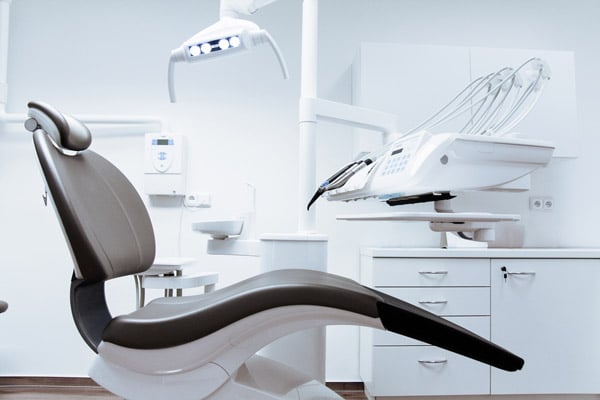
Dental chairs*
Material Science: The Foundation of Performance
The selection of an alloy is a critical engineering decision in medical die casting:
- Aluminum Alloys (A360, A380): The most prevalent choice, prized for an excellent balance of corrosion resistance, thermal conductivity, strength, and castability. They are readily anodized for added hardness, corrosion resistance, and color coding.
- Magnesium Alloys (AZ91D, AM60): Employed where weight reduction is paramount. Magnesium is the lightest structural metal, offering superb damping characteristics (reducing vibration in handheld tools) and good biocompatibility.
- Advanced and Specialty Alloys: Development of high ductility aluminum alloys and biocompatible grades continues to expand the frontier, allowing die-cast components to be used in more structurally demanding, load-bearing applications.
Innovation and Future Trends
- Vacuum-Assisted Die Casting: This has become a near-standard for critical components. By evacuating the die cavity before injection, it drastically reduces the gas porosity, yielding pressure-tight parts suitable for anodization and possessing enhanced mechanical properties for structural purposes.
- Integration and “Part Consolidation”: Designers are increasingly replacing multi-part assemblies with a single, complex die-cast component. This reduces assembly time, potential failure points, and overall device weight while improving structural integrity.
- Surface Engineering and Biocompatibility: Advanced post-processing, such as Type III hardcoat anodization or proprietary antimicrobial coatings, are applied to cast components to enhance wear resistance, biocompatibility and infection control.
- Digital Integration and Industry 4.0: The adoption of digital twins for mold design, real-time process monitoring with AI-driven analytics, and automated post-casting quality checks (using X-ray and CT scanning) ensure consistent production of defect-free components.
Conclusion
Die casting was far more than a mere manufacturing step; It is a discipline of precision engineering that sits at the heart of medical device advancement. By enabling the mass production of lightweight, complex, durable and sterile compatible components, it allows designers and engineers to turn innovative concepts into life-saving and life-enhancing realities. As medical technology continues its rapid evolution toward miniaturization, robotics and personalized care, the essential role of precision die casting will only grow more pronounced, cementing its position as a cornerstone of modern medical manufacturing.
Reference
*Image from https://azlaserdentistry.com/