
In the fiercely competitive market for personal audio, wireless earbuds are far more than accessories. It’s a compact, critical piece of hardware-a portable charging station, a protective vault, and a statement of design. Its journey from digital blueprint to seamless product in the user’s pocket is fraught with mechanical, aesthetic and ergonomic challenges. Bridging this gap between concept and mass production does not require a leap of faith, but a precise, iterative process: vacuum casting. This advanced prototyping technique is the unsung hero in developing the perfect earbud case, taking the risk out of design and engineering the user experience one high-fidelity prototype at a time.
The Case for Prototyping: Why the Charger Demands as Much Attention as the Earbuds
Before delving into the process, it’s essential to understand the complexities a case must master:
Precision Mechanics: It must house earbuds with a satisfying, secure magnetic snap, align pogo pins for flawless charging, and feature a hinge that survives thousands of cycles.
Durability: It must withstand drops, scrapes, and the constant friction of life in a pocket or bag.
User Experience (UX): The lid’s action, the tactile feedback of the latch, the hand-feel, and even the sound of the close must feel premium.
Aesthetics: It requires a flawless surface finish, precise logos, and often, specific textures or translucent elements for LED indicators.
The Vacuum Casting Process: A Tailored Fit for Case Development
The methodology is uniquely suited for this task:
Master Creation: A flawless, high-resolution master model is 3D printed, typically using Stereolithography (SLA) or Digital Light Processing (DLP). This master is meticulously finished and polished, as every detail will be replicated.
Silicone Mold Making: The master is suspended in a box, and liquid silicone is poured around it. Once cured, the silicone block is cut open and the master removed, leaving a perfect negative cavity – a flexible mold capable of capturing undercuts and fine textures.
Casting Under Vacuum: A two-part polyurethane resin, chosen to mimic a target production plastic, is mixed, degassed and poured into the mold. The entire operation takes place in a vacuum chamber. This critical step evacuates air and prevents microscopic bubbles from marring the surface or compromising the thin walls.
Curing and Demolding: After curing, the flexible silicone mold is peeled away, revealing a prototype that is virtually indistinguishable from a final production part in appearance and, importantly, in function.
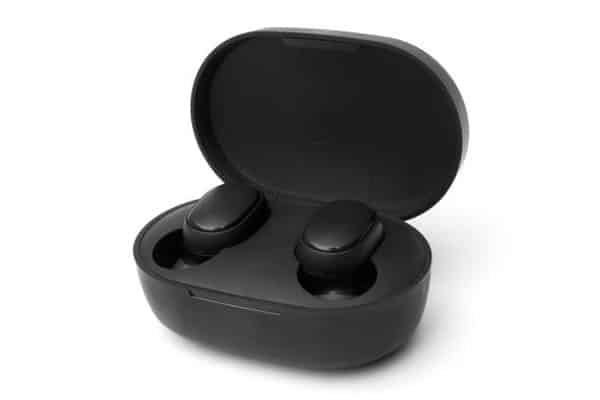
Ear bud case*
Phase-by-Phase: How Vacuum Casting Perfects Every Aspect
Phase 1: Geometrical Validation & Fit Testing
The first casts are about answering fundamental questions. Do the earbuds fit? Is the insertion/removal force correct? Does the lid clear the earbud stems? Engineers can produce a handful of cases and test them with actual earbud prototypes. This phase catches major spatial conflicts before a single metal tool is cut, saving weeks of redesign and tens of thousands of dollars.
Phase 2: Mechanical Lifecycle & Durability Simulation
This is where vacuum casting shines. Using engineering-grade polyurethane resin, the team was able to simulate different final materials:
For Rigid Housings: A resin with a high Shore D hardness, similar to ABS or Polycarbonate, is used to prototype the main case body. Prototypes undergo periodic hinge testing on an automated rig to predict wear and failure points.
For Impact Resistance: A tougher, more flexible resin can be used to simulate the performance of materials like TPU (Thermoplastic Polyurethane) for drop-testing, identifying weak corners or stress points.
For Hinges & Latches: The specific “click” feeling is engineered here. By adjusting the flexibility of the resin and designing subtle features in the mold, engineers can prototype and test different latching mechanisms to find the perfect balance of safety and ease of use.
Phase 3: Aesthetic Refinement & Surface Finish
The visual and tactile appeal is finalized through vacuum casting. Designers can experiment at low cost:
Textures: The silicone mold can be treated or the master can be textured to produce cases with a matte, grippy, glossy, or soft-touch finish.
Colors & Translucency: Resins come in virtually any color or level of transparency. This allows for perfecting the hue of a case or prototyping how an internal charging LED diffuses through a semi-transparent window.
Branding: Small, sharp logos and lettering are reproduced to perfection, allowing the marketing team to approve the final look.
Phase 4: User Experience (UX) & Market Testing
Perhaps most crucially, vacuum casting enables real human feedback. A batch of 30-50 near-final prototypes can be given to focus groups or used internally. How does the case feel in a jeans pocket? Is it easy to open one-handed? Does it look premium? This qualitative data is invaluable and can trigger the final tweaks that define a product’s market reception.
The Strategic Advantage: Speed, Cost, and De-risked Innovation
Compared to the alternative—commissioning an aluminum or soft steel “prototype tool” for injection molding—vacuum casting is dramatically faster and more cost-effective for the 20-100 parts quantity needed for development.
Speed: From a master model to first parts in hand can be under 72 hours.
Cost: A single silicone mold costs a fraction of even a simple metal prototype tool, and multiple design iterations can be explored for the price of one metal tool modification.
Flexibility: Want to test the same geometry in three different simulated materials (rigid, flexible, transparent)? Simply pour different resins into the same silicone mold.
The Invisible Bridge to Production
The final output of a vacuum casting phase is not just a box of prototypes. It is certainty. It is a validated, tested, and user-approved design that can be sent to a molding toolmaker with complete confidence. The data gathered—on fit, force, cycle life, and aesthetic preference—informs the final specifications for the production-grade steel injection mold.
Conclusion
The wireless earbud case that effortlessly protects and charges your earbuds is the product of meticulous, iterative refinement. Vacuum casting is the essential, behind-the-scenes process that makes this refinement possible. It transforms abstract CAD models into tangible, testable objects that allow engineers to stress-test hinges, designers to perfect finishes, and companies to validate the entire user experience. In the high-stakes race to create the perfect portable audio accessory, vacuum casting is the technology that ensures the case is not an afterthought, but a perfectly engineered product in its own right, ready for the journey from prototype to pocket.
Reference
*Image from https://www.istockphoto.com/