
Polycarbonate (PC) is a highly durable, transparent thermoplastic known for its impact resistance, optical clarity, and excellent heat resistance. Due to these properties, it is widely used across industries such as electronics, automotive, medical devices, and consumer products. When precision and complex geometries are required, CNC machining becomes an essential manufacturing process for polycarbonate components. This comprehensive guide aims to provide you with valuable insights, tips, and techniques to optimize CNC machining of polycarbonate, ensuring high-quality results and efficient production.
Why Choose Polycarbonate for CNC Machining?
Polycarbonate stands out among thermoplastics because of its unique combination of properties:
- High Impact Resistance: It can withstand significant force without cracking or breaking.
- Optical Clarity: Its transparency makes it ideal for lenses, windows, and display covers.
- Heat Resistance: It can tolerate temperatures up to approximately 135°C (275°F), depending on grade.
- Lightweight: Offers strength comparable to glass but with less weight.
- Electrical Insulation: Suitable for electronic enclosures and insulating parts.
These attributes make polycarbonate a preferred choice for many precision-engineered components, especially when complex geometries and tight tolerances are involved.
Preparing for CNC Machining of Polycarbonate
Proper preparation is critical for successful CNC machining. Here are key considerations:
Material Selection: Use high-quality, virgin polycarbonate sheets or rods to ensure consistent machinability.
Design Optimization: Incorporate features like fillets and chamfers to reduce stress concentrations and facilitate easier machining.
Tool Selection: Use sharp, high-speed steel (HSS) or carbide tools designed for plastics to achieve smooth finishes and prevent melting or cracking.
Fixture and Clamping: Secure the workpiece firmly to avoid vibrations, which can cause surface imperfections.
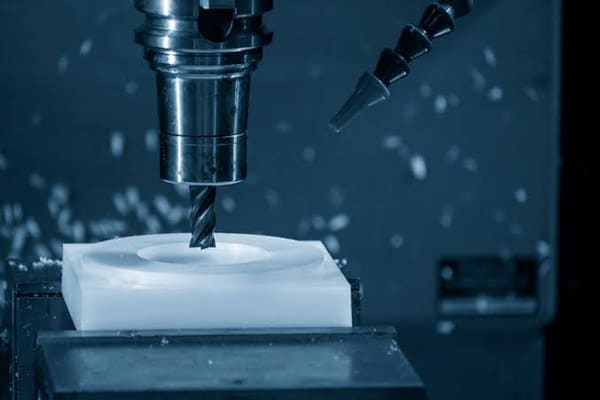
Plastic cnc machining*
CNC Machining Techniques for Polycarbonate
1. Cutting Speed and Feed Rate
- Speed: Typically, spindle speeds between 10,000 and 20,000 RPM are suitable.
- Feed Rate: Maintain moderate feed rates to prevent melting; approximately 50-150 mm/min, depending on tool diameter and machine capability.
- Rationale: High speeds can generate heat, leading to melting or warping, so balance is essential.
2. Depth of Cut
- Opt for shallow passes, especially for intricate details or thin sections, to minimize heat buildup and stress.
3. Cooling and Lubrication
- Use air blasts or mist cooling to dissipate heat and reduce the risk of melting.
- Avoid excessive lubrication, as oils can cause surface blemishes or interfere with adhesion if the part is further processed.
4. Tool Path Strategies
- Use climb milling for cleaner cuts.
- Incorporate gentle entry and exit moves to minimize stress on the material.
- For detailed features, utilize adaptive or tapered tool paths to maintain smooth surfaces.
Tips for Achieving High-Quality CNC Machined Polycarbonate
Maintain Sharp Tools: Dull tools can cause heat buildup, melting, and surface roughness.
Optimize Tool Geometry: Use tools with sharp cutting edges and appropriate rake angles.
Reduce Heat Generation: Employ lower cutting speeds and adequate cooling.
Avoid Excessive Clamping Pressure: Over-tightening can cause stress and cracks.
Post-Machining Finishing: Light sanding or polishing can enhance surface smoothness and optical clarity.
Prevent Cracking: Avoid machining at very thin sections or sharp internal corners which can induce stress.
Common Challenges and Solutions
|
Challenge |
Cause |
Solution |
| Melting or Warping | Excessive heat | Use lower speeds, proper cooling, and shallow cuts |
| Surface Blemishes | Tool dullness or improper feed | Regularly replace tools and optimize feed rate |
| Cracks or Stress | Mechanical stress during clamping or machining | Use gentle clamping and avoid internal stress concentrations |
| Poor Surface Finish | Incorrect tool geometry or feed rate | Use sharp tools and adjust parameters for smoother finishes |
Safety Considerations
Wear appropriate PPE, including eye protection and dust masks.
Ensure proper ventilation to avoid inhaling fumes generated during machining.
Handle polycarbonate materials carefully to prevent scratches or damage.
Final Thoughts
CNC machining of polycarbonate offers remarkable precision and versatility, enabling the production of complex, transparent, and impact-resistant components. By understanding the material properties and employing optimal machining techniques—such as controlled speeds, proper tool selection, effective cooling, and careful design—you can achieve superior quality parts with excellent surface finish and dimensional accuracy.
Investing time in process optimization and adhering to best practices helps prevent common issues like melting, cracking, or surface imperfections, ultimately leading to successful projects and satisfied clients. Whether you’re producing prototypes, custom enclosures, or intricate optical components, mastering CNC machining of polycarbonate unlocks a world of design possibilities.
Reference
*Image from https://schantzfab.com/