
In the rapidly evolving field of healthcare, precision and reliability are paramount. The medical industry demands highly accurate, durable, and complex components for a variety of applications, ranging from surgical instruments to diagnostic devices. Computer Numerical Control (CNC) machining has emerged as a vital manufacturing technology that meets these stringent requirements. This article explores the techniques involved in CNC machining tailored for medical applications, highlights the benefits it offers, and discusses its diverse uses within the medical industry.
CNC Machining Techniques in the Medical Industry
CNC machining involves the use of computer-controlled tools to produce precise parts from various materials such as metals, plastics, and composites. In the medical field, specific techniques are employed to ensure the highest standards of quality and precision:
Milling: This subtractive process involves removing material from a workpiece using rotary cutters. It’s ideal for creating complex geometries, intricate features, and precise tolerances required in medical devices.
Turning: Using a lathe, this technique shapes parts by rotating the workpiece against cutting tools. It’s commonly used for manufacturing surgical instrument shafts and other cylindrical components.
Laser Engraving and Cutting: For detailed surface markings, branding, or custom designs, laser technology provides high precision without compromising material integrity.
Electrochemical Machining (ECM): Suitable for creating complex, delicate parts, ECM uses electrical energy and chemical erosion to shape materials with minimal mechanical stress.
Additive Manufacturing: Combining CNC with 3D printing methods allows for rapid prototyping and the production of customized implants and prosthetics.
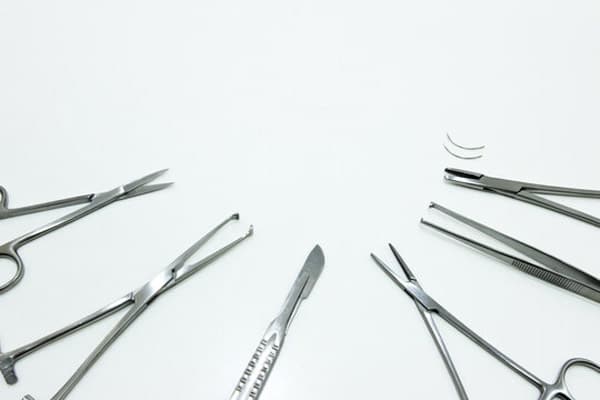
Forceps*
Materials Used in Medical CNC Machining
1. Stainless Steel
Stainless steel is one of the most versatile and widely utilized materials in medical manufacturing. The grades 316L and 17-4 PH are particularly favored:
316L Stainless Steel:
This low-carbon version of 316 stainless steel offers excellent corrosion resistance, especially against chlorides and other bodily fluids. Its high strength and ductility make it suitable for surgical instruments, clamps, and medical devices that require sterilization without degradation. The low carbon content minimizes carbide precipitation during welding, enhancing its corrosion resistance.
17-4 PH Stainless Steel:
Known for its high strength-to-weight ratio and excellent hardness after heat treatment, 17-4 PH is often used for surgical instruments, dental tools, and implantable devices. Its ability to withstand sterilization processes such as autoclaving makes it ideal for reusable instruments.
2. Titanium and Titanium Alloys
Titanium has become a material of choice in the medical field due to its exceptional biocompatibility, corrosion resistance, and lightweight nature:
Pure Titanium (Grade 2):
Often used in dental implants, bone plates, and screws due to its excellent biocompatibility and strength.
Titanium Alloys (Ti-6Al-4V):
These alloys combine titanium with aluminum and vanadium to enhance strength and fatigue resistance. They are widely used in orthopedic implants, joint replacements, and prosthetic devices.
3. Medical-Grade Plastics
Plastics are essential for applications where metal is not suitable, especially for non-load-bearing components, housings, and disposable devices:
PEEK (Polyether ether ketone):
A high-performance thermoplastic known for excellent chemical resistance, mechanical strength, and biocompatibility. It is used in spinal cages, surgical guides, and dental fixtures.
ABS (Acrylonitrile Butadiene Styrene):
Commonly used for device housings, surgical trays, and ergonomic handles due to its toughness and ease of molding.
Polycarbonate:
Valued for its clarity, impact resistance, and sterilizability, often used in fluid handling components and imaging device casings.
Cobalt-Chromium Alloys
Cobalt-chromium alloys are highly regarded for their exceptional strength, wear resistance, and biocompatibility:
Applications: Primarily used in joint replacements such as hip and knee prostheses, dental restorations, and cardiovascular stents.
Benefits of CNC Machining in the Medical Industry
- High Precision and Accuracy: Ensures components meet strict tolerances, essential for medical devices that require perfect fit and function.
- Repeatability and Consistency: Produces identical parts in large volumes, maintaining quality standards across batches.
- Complex Geometries: Capable of manufacturing intricate designs that are difficult or impossible with traditional methods.
- Material Versatility: Suitable for a wide range of biocompatible and durable materials.
- Reduced Lead Times: Faster production cycles facilitate quicker turnaround from prototype to final product.
- Cost-Effectiveness: Minimizes material waste and reduces labor costs, especially for low to medium production runs.
Applications of CNC Machining in the Medical Industry
Surgical Instruments: Manufacturing of scalpels, forceps, scissors, and specialized tools with precise edges and ergonomic designs.
Implants and Prosthetics: Producing custom hip, knee, dental, and cranial implants tailored to individual patient anatomy.
Diagnostic Devices: Creating components for imaging systems, laboratory equipment, and sensor housings.
Medical Device Housings and Casings: Fabricating durable enclosures for electronic medical devices.
Research and Development: Rapid prototyping of experimental devices and components to accelerate innovation.
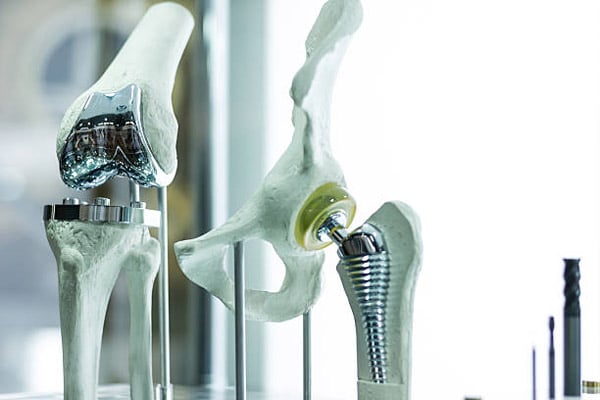
Hip and knee prostheses**
Future Trends and Innovations
As technology advances, CNC machining in the medical industry is poised to become even more sophisticated:
Automation and AI Integration: Enhancing precision, reducing errors, and streamlining production processes.
Advanced Materials: Development of new biocompatible and bioinert materials for better patient outcomes.
Hybrid Manufacturing: Combining additive and subtractive methods for complex, customized solutions.
Miniaturization: Producing smaller, more intricate components for minimally invasive procedures.
Conclusion
CNC machining has become an indispensable tool in the medical industry, enabling the production of high-quality, complex, and reliable medical components. Its precision, versatility, and efficiency significantly contribute to improved healthcare outcomes and innovation. As technology continues to evolve, CNC machining will undoubtedly play an even more vital role in shaping the future of medical device manufacturing, enhancing patient care, and advancing medical science.
Reference
*Image both from https://www.istockphoto.com/