
Polishing is a fundamental process employed across a wide range of industries and crafts to enhance the appearance, texture and functionality of a variety of materials and objects. Whether in jewelry making, manufacturing, automotive detailing, or even in everyday household tasks, polishing plays a vital role in achieving a smooth, shiny, and refined surface. This article provides a comprehensive understanding of polishing, exploring its definitions, techniques, materials, applications, benefits and considerations.
What is Polishing?
Polishing is a surface finishing process that involves reducing the roughness of a material’s surface to achieve smoothness and a glossy or matte appearance, depending on the desired outcome. It typically involves the use of abrasives, compounds, or other tools to remove surface imperfections such as scratches, tarnish, oxidation, or unwanted textures.
The primary goal of polishing is not just aesthetic enhancement but also functional improvement. For example, in optical lenses, polishing ensures clarity; in machinery, it reduces friction; in jewelry, it enhances brilliance and attractiveness.
The Workflow of the Polishing Process
Polishing works by smoothing and refining a surface through the removal of imperfections. It can involve physical abrasion, chemical reactions, or electrochemical methods.
Steps:
1. Cleaning: The surface is cleaned to remove dirt and grease for better results.
2. Material Removal: Abrasives or chemicals remove roughness, scratches, and unevenness.
3. Refinement: Finer abrasives or compounds smooth out micro-scratches and increase shine.
4. Final Finish: The surface is polished with soft cloths or buffing tools to achieve a glossy or matte look.
5. Cleaning & Protection: Residues are cleaned off, and protective coatings may be applied.
Type of Polishing
Mechanical Polishing
Mechanical polishing involves applying chemical solutions that dissolve or smooth the surface at a microscopic level. This process typically uses acids or other reactive chemicals tailored to the material being treated. The chemicals react with the surface, removing tiny imperfections and creating a smoother, often glossy finish.
How It Is Used
Cleaning the surface thoroughly before treatment.
Submerging or coating the object with the chemical solution.
Allowing the reaction to occur for a specified time to remove microscopic peaks.
Rinsing and neutralizing the surface afterward to stop the reaction.
Pros
Produces a highly smooth and uniform surface.
Less mechanical stress, reducing risk of damage.
Ideal for complex or delicate shapes.
Cons
Uses hazardous chemicals requiring careful handling.
Limited to materials that react chemically.
Process control is critical to prevent over-etching or damage.
Chemical Polishing
Chemical polishing involves applying reactive chemicals that dissolve microscopic surface peaks, resulting in a smoother and often shinier finish. The process enhances surface uniformity without physical abrasion.
How It Is Used
Cleaning the object thoroughly.
Coating or immersing in chemical solutions.
Allowing the chemical to react for a set time.
Rinsing and neutralizing the surface afterward.
Pros
Produces a very smooth, even surface.
Suitable for complex shapes.
Gentle, with minimal mechanical stress.
Cons
Uses hazardous chemicals requiring proper safety measures.
Limited to compatible materials.
Requires precise control to avoid damage.
Electrolytic Polishing (Electropolishing)
Electropolishing uses an electric current and electrolyte solution to remove a thin layer of metal, giving a shiny, smooth, and corrosion-resistant surface.
How It Is Used
Submerging the metal in a special electrolyte solution.
Applying an electric current.
Controlling voltage and time to remove microscopic peaks.
Rinsing and finishing the surface.
Pros
Creates a high-gloss, mirror finish.
Removes contaminants and burrs.
Improves corrosion resistance.
Cons
Requires specialized equipment.
Mostly limited to certain metals like stainless steel and titanium.
Vibratory Polishing
Vibratory polishing uses a vibrating container filled with abrasive media and polishing compounds to smooth and finish surfaces uniformly.
How It Is Used
Placing parts and abrasive media in the vibratory tumbler.
Running the machine for several hours.
The vibrations cause the media to grind and polish the surfaces.
Pros
Ideal for small, complex, or delicate parts.
Produces consistent results.
Efficient for batch processing.
Cons
Takes time to achieve desired finish.
Limited control over individual surface areas.
Abrasive Flow Polishing
Abrasive flow polishing involves flowing a semi-liquid abrasive media through a flexible mold or over a surface to smooth irregularities.
How It Is Used
Filling the mold or surface with abrasive paste.
Running the flow for a set period.
The media erodes surface peaks, resulting in a smooth finish.
Pros
Very precise and uniform.
Suitable for complex or internal surfaces.
Produces high-quality finishes.
Cons
Equipment can be expensive.
Limited to specific applications.
Barrel Polishing
Barrel polishing involves placing parts and abrasive media inside a rotating barrel, which tumbles the media and parts together to smooth surfaces.
How It Is Used
Loading parts and abrasive media into a barrel.
Rotating the barrel for several hours.
The tumbling action polishes and deburrs parts.
Pros
Good for mass finishing large quantities.
Removes burrs and surface imperfections.
Cost-effective for small parts.
Cons
Less control over individual surfaces.
May require multiple stages for different finishes.
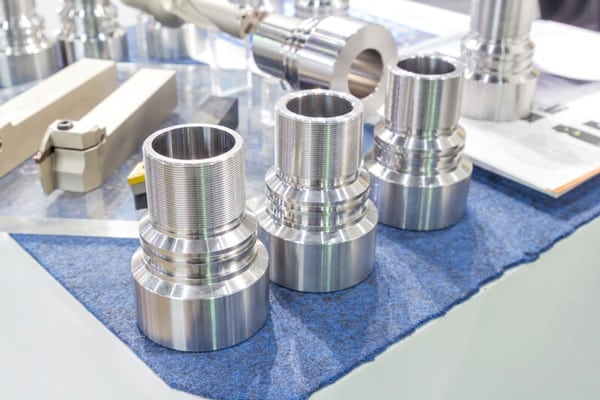
Electropolishing machined parts*
Common Materials Used in Polishing
The materials and tools used in polishing vary widely depending on the object and desired finish:
- Abrasives: Sandpaper, emery cloth, diamond abrasives, and polishing compounds.
- Polishing Compounds: Tripoli, rouge, cerium oxide, and other specialized pastes.
- Tools: Buffing wheels, polishing cloths, rubber abrasives, and ultrasonic polishers.
- Chemicals: Acidic or alkaline solutions, solvents, and chemical agents tailored for specific materials.
Tips for Choosing the Appropriate Polishing Technique
Material Type: Different materials require specific techniques. Metals like stainless steel or aluminum often benefit from buffing, electropolishing, or abrasive flow polishing. Plastics may need vapor or chemical polishing to avoid damage. Glass and ceramics typically require mechanical or vibratory polishing for smooth finishes.
Desired Surface Finish: For a high-gloss, mirror-like surface, buffing or electropolishing is ideal. For a matte or satin finish, vibratory polishing or abrasive flow methods work well. The finish you want will influence the choice of technique.
Complexity of the Surface: Simple, flat surfaces are easiest to polish with mechanical methods like buffing. Complex shapes, internal surfaces, or detailed geometries often require chemical polishing or abrasive flow to reach all areas evenly.
Production Volume and Speed:Small batches or prototypes may be suited for manual polishing or buffing. Large-scale production benefits from automated methods like barrel or vibratory polishing, which are faster and more consistent.
Cost and Equipment Availability: Manual methods are generally less expensive and require minimal equipment. For high-volume or precision work, investing in advanced equipment like electropolishing setups or abrasive flow systems can be more cost-effective in the long run.
Applications of Polishing
Polishing is utilized across diverse fields, including:
Jewelry and Gemology: Enhancing the luster and brilliance of gemstones and metals.
Manufacturing: Improving the surface quality of machined parts, tools, and components.
Automotive Industry: Restoring paintwork, chrome, and metal surfaces to a high shine.
Optics: Producing lenses, mirrors, and precision instruments with smooth surfaces.
Medical Instruments: Ensuring surfaces are smooth to prevent bacterial buildup.
Home and Decorative Items: Polishing furniture, fixtures, and decorative objects for aesthetic appeal.
Benefits of Polishing
- Enhanced Appearance: Achieving a visually appealing, glossy, or matte finish.
- Corrosion Resistance: Smoother surfaces are less prone to corrosion and tarnish.
- Reduced Friction: Polished surfaces reduce wear and tear in mechanical applications.
- Improved Hygiene: In medical and food industries, polished surfaces are easier to clean and sterilize.
- Increased Durability: Proper polishing can prolong the lifespan of objects by minimizing surface damage.
Considerations and Challenges
While polishing offers numerous benefits, it also presents certain challenges:
- Material Compatibility: Not all materials respond well to polishing; some may be damaged or lose structural integrity.
- Surface Damage: Excessive or improper polishing can cause scratches, warping, or loss of detail.
- Environmental and Safety Concerns: Use of chemicals and abrasives requires proper handling and disposal.
- Cost and Time: High-quality polishing, especially for intricate objects, can be time-consuming and costly.
Innovations in Polishing Technology
Recent advances have introduced innovative tools and methods, such as robotic polishing, ultrasonic polishing, and nanotechnology-based abrasives, which allow for higher precision, efficiency, and environmentally friendly processes.
Conclusion
Polishing is more than just a finishing step; it is an art and science that significantly impacts the appearance, functionality, and longevity of objects across various industries. Understanding the principles, techniques, and materials involved enables industries and artisans to optimize their processes and achieve superior results. As technology continues to evolve, polishing will remain a critical process, blending traditional craftsmanship with modern innovation to meet the growing demands for quality and perfection.
Reference
*Image from https://www.delstar.com/