
Waterjet cutting is a highly versatile and precise manufacturing process that has revolutionized the way industries approach material fabrication. Used across various sectors including aerospace, automotive, construction, and art, waterjet cutting offers numerous advantages over traditional cutting methods. This article provides an in-depth overview of waterjet cutting, exploring its techniques, the materials it can handle, and the benefits it offers.
What is Waterjet Cutting?
Waterjet cutting is a process that employs a high-pressure jet of water, often mixed with abrasive particles, to cut through a wide range of materials. Unlike traditional methods such as sawing, laser, or plasma cutting, waterjet cutting does not generate significant heat, making it a cold cutting process. This attribute minimizes thermal distortion and preserves the integrity of the material’s properties.
How Does Waterjet Cutting Work?
The process involves several key components:
1. High-Pressure Pump: Generates water pressure typically between 30,000 to 90,000 psi.
2. Orifice and Mixing Tube: The high-pressure water passes through an orifice, transforming into a focused jet.
3. Abrasive Feeder: Adds abrasive particles like garnet to enhance cutting power.
4. Cutting Head: Directs the high-velocity jet onto the material, following CNC programming to achieve precise cuts.
The CNC system allows for intricate designs, complex geometries, and tight tolerances, making waterjet cutting suitable for detailed fabrication.
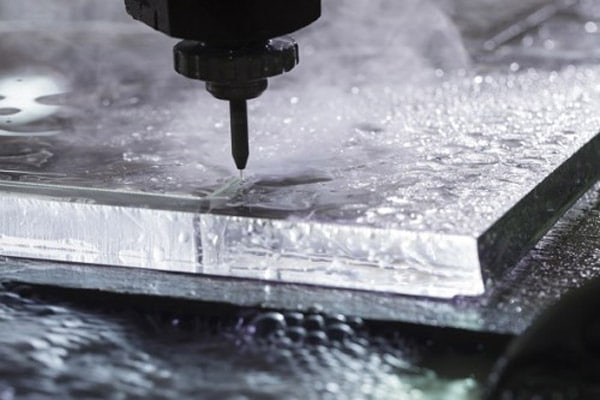
Waterjet cutting*
Types of Waterjet Cutting
- Pure Waterjet Cutting: Uses only high-pressure water to cut softer materials like rubber, plastic, and foam.
- Abrasive Waterjet Cutting: Incorporates abrasive particles to cut harder materials such as metals, stone, and composites.
Materials Suitable for Waterjet Cutting
One of the significant advantages of waterjet cutting is its ability to handle a diverse array of materials, including:
Metals: Steel, stainless steel, aluminum, titanium, copper, and more.
Stone: Marble, granite, limestone, and other natural stones.
Glass: Including tempered and laminated glass.
Composites: Carbon fiber, fiberglass, and other advanced materials.
Plastics: Acrylic, polycarbonate, PVC, and other plastics.
Rubber and Foam: Used in manufacturing and prototyping.
The process excels in cutting materials that are difficult to machine with traditional methods, especially when precision and clean edges are required.
Advantages of Waterjet Cutting
Waterjet cutting offers numerous benefits that make it a preferred choice in many manufacturing environments:
Precision and Accuracy: Capable of achieving tolerances within thousandths of an inch, enabling detailed and complex designs.
No Heat Affected Zone (HAZ): Being a cold cutting process, it prevents thermal distortion, warping, or altering material properties.
Versatility: Can cut a broad range of materials, thicknesses, and shapes.
Minimal Material Waste: Precise control reduces waste, making it cost-effective.
Environmentally Friendly: Uses water and abrasive materials that are recyclable and produce minimal hazardous waste.
Smooth Edges: Produces clean, burr-free edges that often do not require further finishing.
No Tool Wear: Unlike mechanical tools, the cutting head does not contact the material, reducing wear and maintenance costs.
Capable of Cutting Thick Materials: Suitable for cutting thick metals and stones with high precision.
Applications of Waterjet Cutting
Due to its flexibility and precision, waterjet cutting is widely used in various industries:
Automotive: Cutting custom parts, prototypes, and complex components.
Aerospace: Fabricating lightweight, high-precision parts from advanced materials.
Construction: Cutting stone, tiles, and structural components.
Art and Design: Creating intricate sculptures, signage, and decorative elements.
Manufacturing: Producing precise components for machinery and electronics.
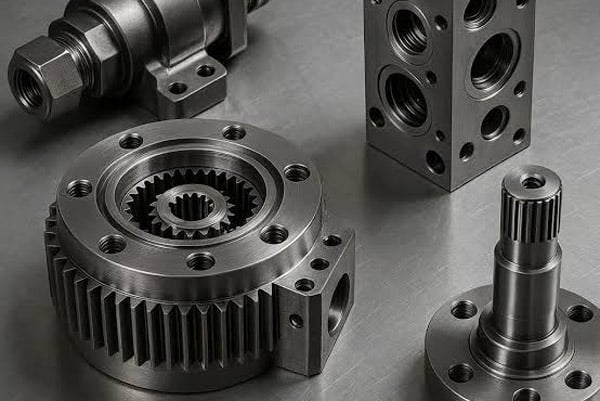
CNC parts**
Limitations to Consider
While waterjet cutting has many advantages, it also has some limitations:
- Speed: Generally slower than laser or plasma cutting, especially for thin materials.
- Operational Costs: Abrasive materials and maintenance can add to expenses.
- Surface Finish: May require polishing or finishing, especially on softer materials.
Conclusion
Waterjet cutting stands out as a highly adaptable, precise, and environmentally friendly manufacturing process. Its ability to cut a wide range of materials without thermal distortion, combined with its capability for intricate and detailed designs, makes it an invaluable tool across numerous industries. As technology advances, waterjet cutting is expected to become even more efficient, cost-effective, and integral to innovative manufacturing solutions.
Whether for prototyping, production, or artistic projects, waterjet cutting continues to demonstrate its importance in modern fabrication.
Reference
*Image from https://www.swiftglass.com/
**Image from https://rapidaccu.com/